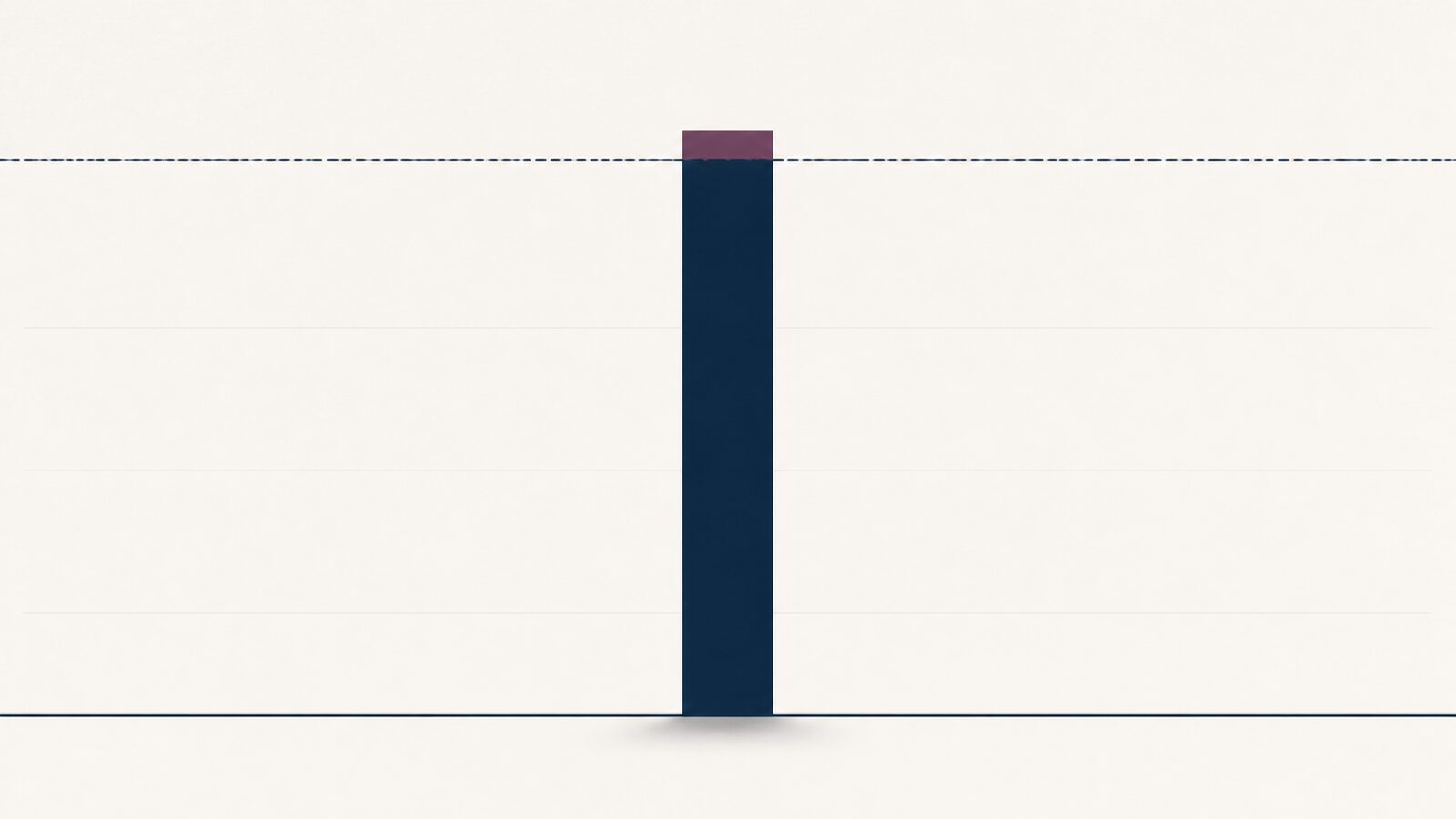
Over-billing (billings in excess of costs and estimated earnings) means a contractor has invoiced the owner for more than the revenue it has earned to date; it is recorded as a current liability on the balance sheet. Under-billing (costs and estimated earnings in excess of billings) is the reverse, earned revenue exceeding invoices sent, and it is recorded as a current asset. The over/(under) billing figure is one column on the work-in-progress (WIP) schedule, and it is calculated one way: Billed to Date minus Earned Revenue. A positive result is overbilled; a negative result is underbilled.
That is the whole definition. The rest of this post does three things a Finance reader actually needs: it lays out the over/under billing formula chain as a table, walks one fully worked example where every figure recomputes from the inputs, and explains what each position signals to your surety underwriter, because the same number that looks like healthy cash flow can be the thing hiding a losing job.
Numbers below are synthetic — round figures from a fictional general contractor, Meridian Construction Group, on its Harbor Point Tower job. They are the same figures used across the WIP Ready series, so the math ties out across posts.
What is over-billing and under-billing? (The two-sentence test)
Over-billing means you have billed the owner more than you have earned; under-billing means you have earned more than you have billed. "Earned" here is a precise term: it is the revenue a contractor has recognized under ASC 606's percentage-of-completion method — proportional to costs incurred, not the dollar amount it has invoiced (Foundation Software).
Each position maps to a named balance-sheet account that US sureties and construction accountants will recognize on sight:
- Over-billing is a current liability: billings in excess of costs and estimated earnings. You have collected ahead of the work: a timing benefit, but money you have not yet earned.
- Under-billing is a current asset: costs and estimated earnings in excess of billings. You have performed work and recognized the revenue, but you have not yet invoiced for it.
ASC 606 relabels these accounts as "contract liabilities" and "contract assets," but the US construction-finance and surety world still reads and writes the legacy terms — billings in excess of costs, costs in excess of billings — so those are the labels used throughout this post.
Why the position matters beyond bookkeeping: a surety treats your over/under billing pattern as a health signal, not an accounting footnote. Per Mahki Abner of Old Republic Surety, writing in the NASBP Pipeline, "Underbillings can signal deeper financial challenges, particularly when they contribute to profit fades" (NASBP). The figure on the WIP is one of the first things an underwriter reads.
How is over/under billing calculated? (The formula)
Over/(Under) Billing = Billed to Date minus Earned Revenue. Earned Revenue = Contract Value multiplied by Percent Complete. Percent Complete = Costs Incurred to Date divided by Estimated Cost at Completion (EAC), where EAC = Costs to Date plus Estimate to Complete (ETC). That is the full chain — three steps and one supporting definition.
Here it is as a table you can lift straight into your own schedule:
| Step | Formula | Purpose |
|---|---|---|
| 1. Percent Complete | Costs to Date ÷ EAC | The cost-to-cost measure of progress under ASC 606 |
| 2. Earned Revenue | Contract Value × Percent Complete | Revenue recognized to date |
| 3. Over/(Under) Billing | Billed to Date − Earned Revenue | Positive = overbilled (liability); negative = underbilled (asset) |
| EAC definition | Costs to Date + ETC | ETC is the PM's estimate of remaining cost |
One thing trips people up here: EAC is not the original contract budget. It is the current best estimate of total cost: costs incurred to date plus the estimate to complete (ETC) the project manager enters each close cycle. As that ETC moves, the percent complete moves, and so does the billing position. If the ETC is stale or optimistic, the percent complete is overstated, the earned revenue is inflated, and the billing position on your schedule is wrong before anyone touches a billing number.
Under ASC 606, contractors using the percentage-of-completion method recognize revenue in proportion to costs incurred, which makes the EAC the denominator that governs every billing position on the WIP schedule (ASC 606-10-25; FASB ASU 2014-09). The billing column is downstream of the cost estimate, not independent of it.
Worked example: Harbor Point Tower (Meridian Construction Group)
The fastest way to see the formula in action is a single-project row. The example below uses internally consistent, ASC-606-correct figures for Meridian Construction Group's Harbor Point Tower job — every number recomputes exactly from the inputs shown, with no rounding.
| Field | Amount |
|---|---|
| Contract Value | $1,000,000 |
| Costs Incurred to Date | $300,000 |
| Estimate to Complete (ETC) | $450,000 |
| Estimated Cost at Completion (EAC = Costs + ETC) | $750,000 |
| Percent Complete (Costs ÷ EAC) | 40.0% |
| Earned Revenue (Contract Value × % Complete) | $400,000 |
| Billed to Date | $450,000 |
| Over/(Under) Billing (Billed − Earned) | $50,000 (overbilled) |
| Estimated Gross Profit (Contract − EAC) | $250,000 (25.0% margin) |
| Balance-Sheet Account | Billings in excess of costs and estimated earnings (current liability) |
Walk it row by row. Costs to date ($300,000) plus the PM's ETC ($450,000) gives an EAC of $750,000. Percent complete is $300,000 ÷ $750,000 = 40.0% exactly. Earned revenue is $1,000,000 × 40.0% = $400,000. Harbor Point Tower has billed the owner $450,000, which is $50,000 more than the $400,000 it has earned, so the job is overbilled by $50,000. That $50,000 sits on Meridian's balance sheet as a current liability: billings in excess of costs and estimated earnings. The job's projected gross profit is $1,000,000 − $750,000 = $250,000, a 25.0% margin.
Now flip one input to see the underbilled position. Hold everything else constant and assume Harbor Point Tower had billed only $350,000 instead of $450,000. Earned revenue is still $400,000, so Billed − Earned = $350,000 − $400,000 = −$50,000. The job is underbilled by $50,000, which moves to the asset side of the balance sheet as costs and estimated earnings in excess of billings. Same job, same earned revenue; only the billings changed, and the position flipped from liability to asset.
The honest caveat on this whole table: the over/under billing figure is only as reliable as the ETC the project manager entered. An optimistic ETC understates the EAC, overstates the percent complete, and inflates earned revenue, which can quietly turn a real overbilling into an apparent underbilling, or mask a liability the surety should be seeing. The arithmetic is trivial. Keeping the inputs honest is the work.
What does each position tell your surety?
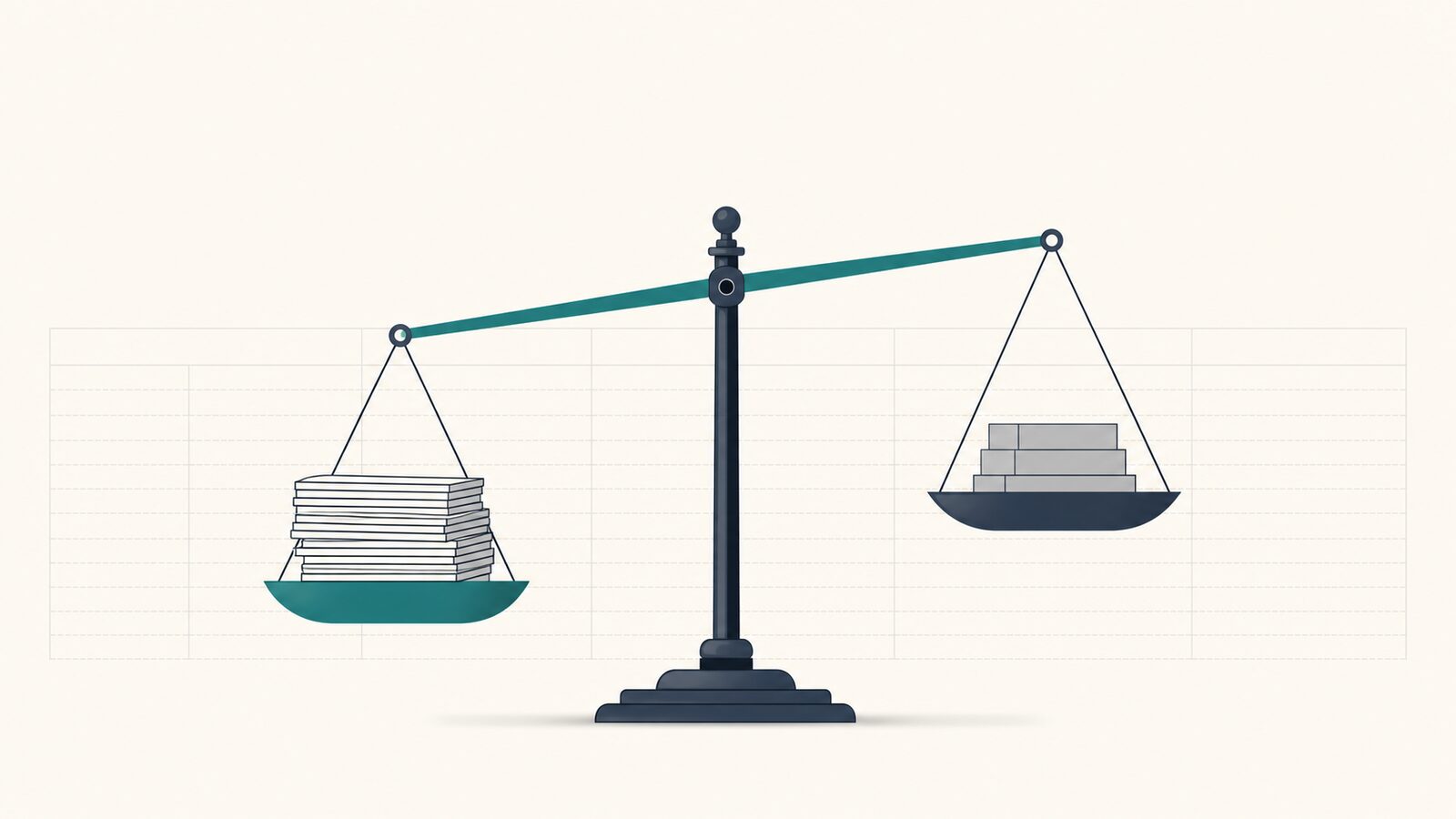
An underwriter reads the billing column for patterns. Persistent overbilling can mask a losing job by making cash flow look healthy; chronic underbilling means the contractor is financing the owner's project with its own working capital. Both put a bond program under scrutiny.
The overbilled position. In the short term, billing ahead of earned revenue produces positive cash flow, which can look like strength. The risk is what it conceals. Overbilling "can show healthy cash flow and acceptable margins even when a job is actually losing money" (WIP Insights). A surety reads the WIP schedule specifically to detect this: to see whether the cash position is earned or merely borrowed forward against work not yet done. A large overbilled balance late in a job, with a thin or fading margin, is exactly the pattern an underwriter is trained to flag.
The underbilled position. Underbilling is an asset on paper, but it is a cash-flow drain in practice: you have spent the money and recognized the revenue without collecting it. As an Old Republic Surety underwriter put it, underbillings "can occur when a contractor incurs costs and earns profits that have not yet been billed to the project owner… often caused by timing differences, unapproved change orders or disputed work" (NASBP). Chronic under-billing means you are, in effect, lending the owner your working capital (Projul).
The surety's specific worry with a growing underbilled balance is collectibility. The NASBP analysis is blunt about how far this can go: one contractor's project, 97% complete at year-end, carried $296,000 in underbillings; six months later, 99% complete, the underbillings had grown to $419,000 despite ongoing losses — a trend that "indicated a low likelihood of collection," leading the surety to disallow those amounts from the contractor's working-capital calculation entirely (NASBP). An underbilled balance the surety does not believe will be collected is not an asset to them; it comes straight out of the working capital that drives your bonding capacity.
What causes under-billing? (And how to spot it early)
Under-billing most often traces to four root causes, and catching them early keeps the underbilled balance from growing into a material cash-flow and bonding problem. Per the surety's view of contractor financials (NASBP), the four are:
- Billing timing lag — the work is complete but the billing cycle has not caught up.
- PM-to-office communication breakdown — the project manager does not notify accounting when a milestone is reached, so the billing never goes out.
- Unapproved change orders — completed work has no approved invoice behind it yet.
- Disputed work — the owner disputes the progress, and the contractor holds the billing.
A current, reconciled WIP schedule is the earliest detection tool you have. The underbilled balance becomes visible the moment the ETC is updated and earned revenue is recomputed against billings to date, which is why the WIP is run monthly rather than annually. The earlier a growing underbilled balance shows up, the more time there is to bill, approve the change order, or resolve the dispute before it lands in front of an underwriter.
The operator takeaway: the number is only as good as the data
The over/under billing figure is a derived output. It is arithmetically correct only if the ETC is current and the costs-to-date are reconciled to the general ledger. A stale ETC or an unreconciled cost entry makes the billing position exactly as unreliable as the inputs that produced it. A wrong billing position is worse than no number at all when it is the one your surety is reading.
The formula is simple: Billed minus Earned. The hard part is a current ETC and reconciled costs every month, across every active job. That is what the WIP schedule is for: the control document that surfaces every billing position the surety, the bank, and the CPA will eventually see, trustworthy only if it is current.
WIP Ready computes over/under billing from your Procore cost data and each PM's timestamped ETC, so the position reflects today's estimate to complete, not last month's. It never calculates the ETC for you — the project manager owns that number, the way an auditor and a surety expect. The figure is only as trustworthy as the data and the ETC behind it; a clean, current WIP is what keeps over/under honest. See how the workflow runs at wipready.com.
Frequently asked questions
What is over-billing in construction? Over-billing means a contractor has invoiced the owner for more than the revenue it has earned to date under the percentage-of-completion method. It is recorded as a current liability called billings in excess of costs and estimated earnings (Foundation Software).
What is under-billing in construction? Under-billing means a contractor has earned more revenue than it has billed — work performed and recognized but not yet invoiced. It is recorded as a current asset called costs and estimated earnings in excess of billings (Foundation Software).
How do you calculate over/under billing? Over/(Under) Billing = Billed to Date − Earned Revenue, where Earned Revenue = Contract Value × Percent Complete and Percent Complete = Costs to Date ÷ EAC (EAC = Costs to Date + ETC). A positive result is overbilled; a negative result is underbilled.
Where does billings in excess of costs go on the balance sheet? Billings in excess of costs and estimated earnings is a current liability on the balance sheet. It represents amounts invoiced ahead of revenue earned. ASC 606 relabels this account as a contract liability, but US sureties and accountants still use the legacy term.
Is overbilling good or bad for a construction company? Overbilling improves short-term cash flow, which can look healthy. The risk is that it "can show healthy cash flow and acceptable margins even when a job is actually losing money" — masking a fading job until it is too far gone to recover (WIP Insights).
What does chronic underbilling mean for cash flow? Chronic underbilling means the contractor is financing the owner's project with its own working capital — it has spent the money and recognized the revenue without collecting it (Projul). A surety may disallow an uncollectible underbilled balance from the working-capital calculation that drives bonding capacity (NASBP).
What causes underbilling on a construction project? Per the surety view, the four common causes are billing timing lag, PM-to-office communication breakdowns, unapproved change orders, and disputed work (NASBP).
What does a surety underwriter look for in over/under billing? Patterns, not single entries. Persistent overbilling late in a job with a thin or fading margin suggests the cash position is borrowed against unfinished work; a growing underbilled balance raises a collectibility question, and a surety may disallow amounts it doubts will be collected from the working-capital calculation that drives bonding capacity (NASBP).