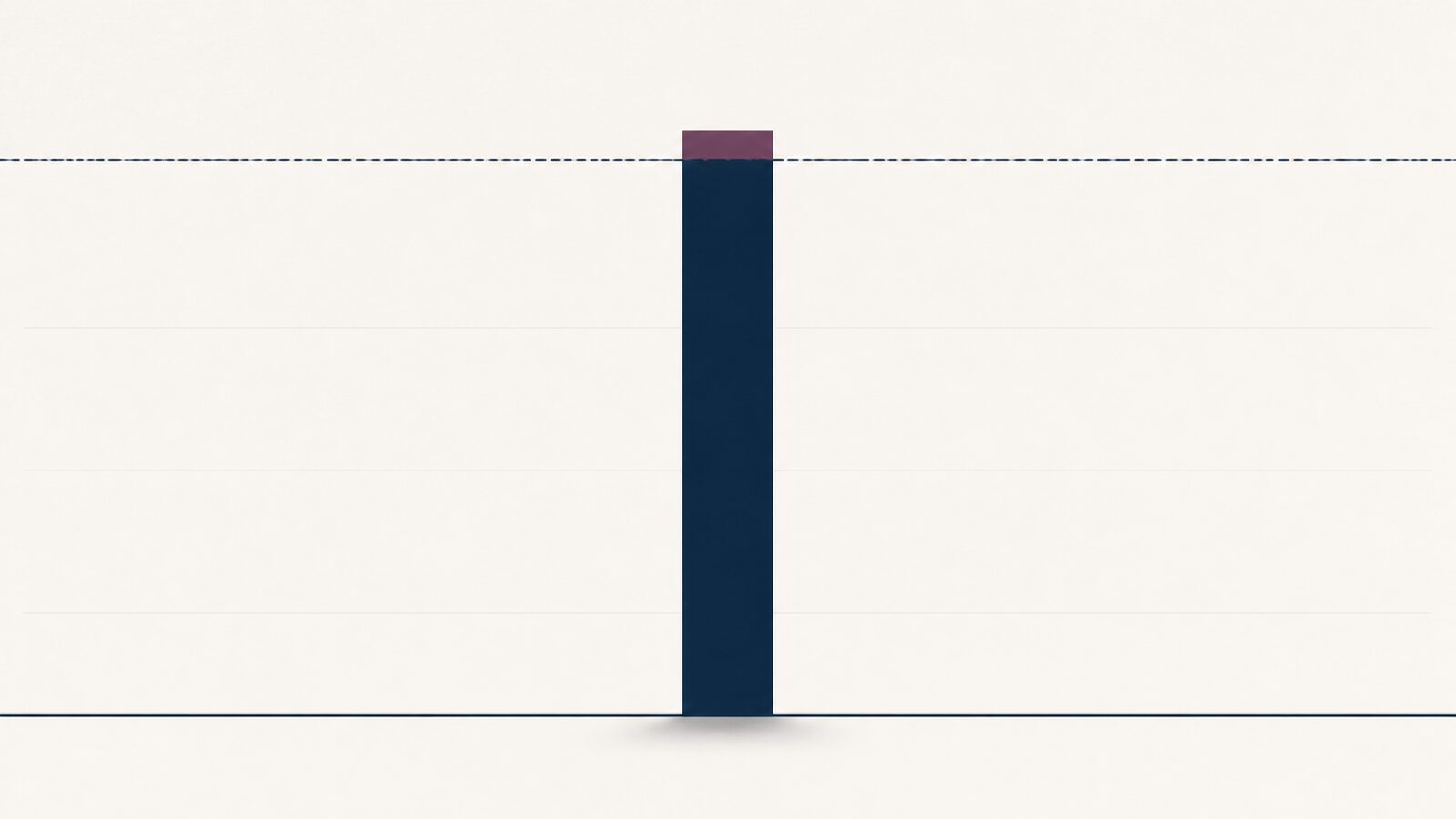
You can have a strong year-end profit, a clean reputation, and a decade with the same agent, and still get told there is no room to bond the next job. The reason is almost always one number: working capital. In surety underwriting, working capital — current assets minus current liabilities — is the figure that sets your bonding capacity, and it is the number a surety leans on harder than any other when it decides how much bonded work you can carry. The catch most contractors miss: the surety does not use the working capital figure printed on your balance sheet. It adjusts it first.
This post is about that adjustment. It covers what working capital is and why sureties weight it most, what assets a surety strips out to get "adjusted working capital," the rule-of-thumb multiple that turns that number into a bonding limit, and — the part no one connects cleanly — how your WIP schedule feeds the current-asset and current-liability lines the whole calculation is built on. If you want the underwriter's full read of the WIP itself, that lives in your surety underwriter's four-question read of the WIP; this post stays on the working capital number underneath it.
What is working capital and why do sureties weight it so heavily?
Working capital is current assets minus current liabilities: the liquidity you can actually deploy to fund work and survive a bad job. A surety weights it above almost everything else because a surety is not a bank. A bank can take collateral; a surety extends credit on your ability to complete the work without running out of cash. Working capital is the cleanest proxy for that ability, which is why it sits at the center of the underwriting file.
Sureties underwrite on three things — character, capacity, and capital, the "three Cs" — and working capital is the primary metric inside "capital" (Projul). Character is your track record. Capacity is your operational ability to perform. Capital is your financial strength, and the first thing the underwriter measures there is liquidity. As Projul puts it, working capital is "the single most important number" in surety underwriting: "Most sureties want working capital equal to at least 5–10% of annual revenue, and many will support $10 to $15 in backlog for every $1 of working capital" (Projul).
That is the logic in one line: the more liquid you are, the more bonded work the surety will trust you to fund at once. Working capital is not the only metric; underwriters also read net worth, the current ratio, the debt-to-equity ratio, and days sales outstanding (Projul; Acrisure). But it is the one that governs how much capacity they extend.
How do sureties calculate adjusted working capital?
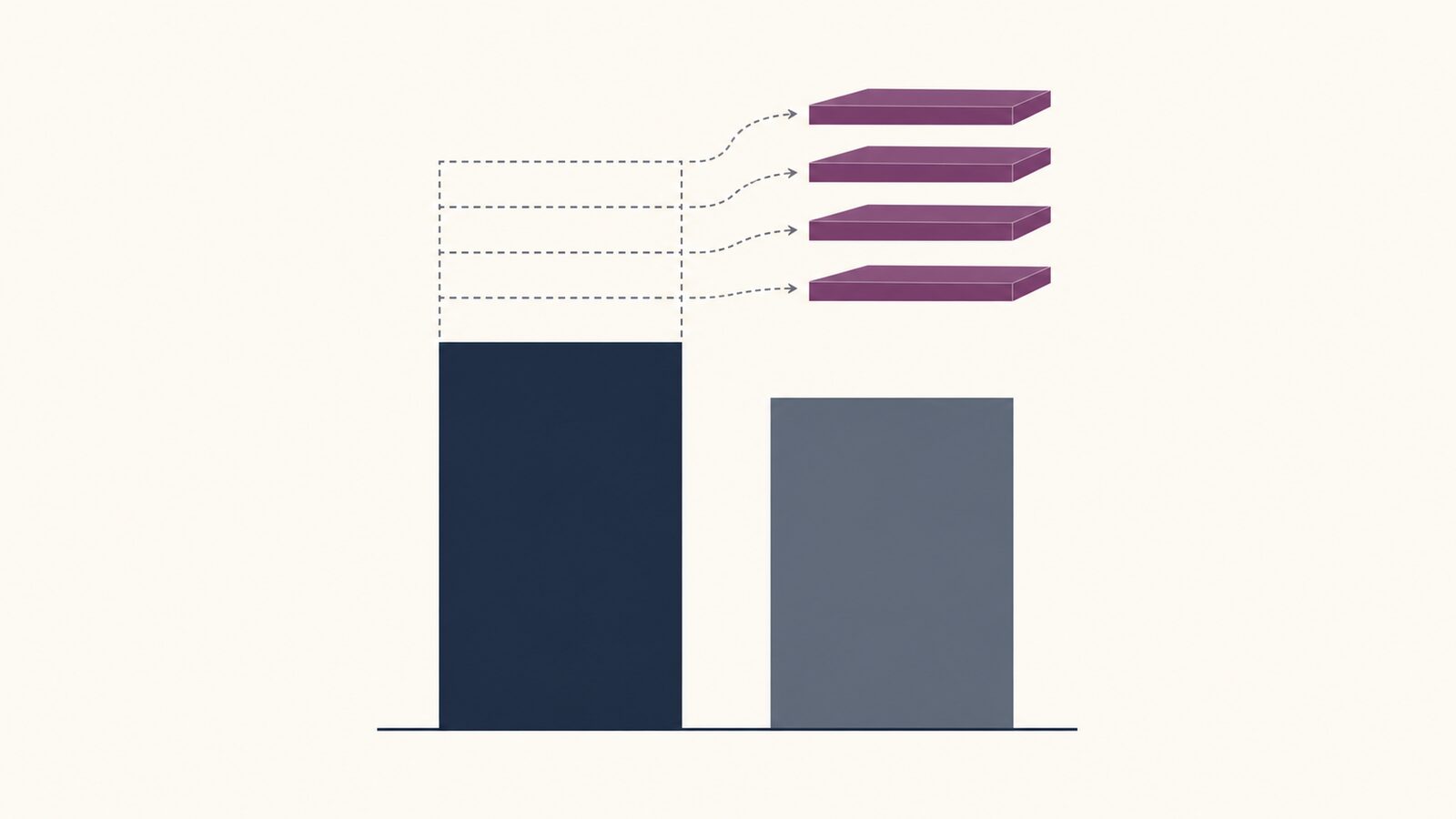
Sureties do not use the raw working capital figure on your balance sheet to set bonding limits — they apply disallowances first. Adjusted working capital strips out assets that carry collection risk, because those assets cannot reliably pay subcontractors or absorb a project loss. The result is a lower, more conservative number, and it is the number that actually drives your aggregate bonding limit. The formula is simple:
Adjusted working capital = Raw working capital − disallowed assets.
The most clearly documented disallowance is underbillings. In a published analysis by Old Republic Surety, reported through the NASBP Pipeline newsletter, "underbillings inflated one contractor's working capital by nearly $3 million," overstating both the contractor's financial position and its qualifying surety program (NASBP). Underbillings are "costs and earned profit in excess of billings" — work performed but not yet billed (NASBP). They sit in current assets and lift raw working capital, but if the underwriter doubts they will ever be collected, they come straight back out.
Here are the asset categories sureties commonly discount or disallow. The size of each haircut varies by surety — some fully exclude a category, others discount it — but these categories recur across surety-agency and construction-CPA guidance:
| Asset category | Why a surety discounts or disallows it |
|---|---|
| Underbillings (costs in excess of billings) | Work performed but not yet billed; a surety questions collectibility, especially on late-stage or loss-making jobs, and disallows amounts unlikely to convert to cash (NASBP). |
| Accounts receivable older than 90 days | Aged receivables are slow or doubtful collections; one surety agency excludes over-90-day items "100% from working capital unless collectability is assured," which is why carriers ask for AR broken out by age (The Fedeli Group). |
| Related-party / affiliate receivables | Money loaned to an affiliated company, subsidiary, or owner is not an arm's-length collectible; sureties "tend to remove amounts a construction business has loaned to related parties" from working capital (WW&D CPA). |
| Prepaid expenses | Prepaids get consumed rather than converted to cash, so they are commonly excluded "100% from working capital" (The Fedeli Group). |
| Inventory and other non-trade assets | Treated as illiquid and discounted rather than counted at full value — one published surety adjustment table marks inventory down 50% (marketable securities 25%); the exact haircut varies by surety (The Fedeli Group). |
| Officer / shareholder loans to the company | A receivable from an owner is not a dependable third-party collection, so it is commonly excluded "100% from working capital" (The Fedeli Group). |
The underbilling row is the one to internalize, because it is the one a surety has shown its work on. In the Old Republic Surety case, one project was 97% complete at year-end and carried $296,000 in underbillings; six months later, with the same project 99% complete, the underbillings had grown to $419,000 despite ongoing losses. As the underwriter concluded, "this trend indicated a low likelihood of collection, leading to the disallowance of these amounts from the contractor's WC calculation" (NASBP). An underbilling that grows as a loss-making job nears completion is not a billing-timing lag — it is revenue you recognized but probably will not collect, and the surety treats it that way.
This is why two contractors with identical balance-sheet working capital can get very different bonding limits. The one whose current assets are mostly cash and current receivables keeps its number; the one whose current assets are padded with stale underbillings watches the surety adjust the figure down, and the bonding program shrinks with it.
What is the rule-of-thumb multiple for bonding capacity?
The common rule of thumb is that aggregate bonding capacity runs at roughly 10 times adjusted working capital — equivalently, that working capital should equal about 10% of your bonded backlog. Projul frames the same relationship from the backlog side: "many sureties will support $10 to $15 in backlog for every $1 of working capital" (Projul), a multiple of about 10x to 15x. Other surety and CPA sources put the aggregate band as wide as 10x to 20x and stress there is no universal formula (WW&D CPA; ProSure Group). Single-job limits are read against the same working-capital base, typically as a fraction of the aggregate. Here are the directional figures:
| Limit type | Rule-of-thumb multiple | Source |
|---|---|---|
| Aggregate bonding program | ~10x–20x adjusted working capital ($10–$20 of bonded backlog per $1; most sources cluster near 10x), with no universal formula | Projul; WW&D CPA; ProSure Group |
| Single-job limit | A fraction of the aggregate — roughly ~5x–10x adjusted working capital, depending on track record and statement quality | Winter-Dent; SuretyCFO |
These are industry rules of thumb, not formulas. Each surety sets its own standards, and the actual multiple depends on the quality of your financial statements, your track record, and the underwriter's judgment — published guidance ranges from about 10x to 20x at the aggregate level. Do not plan around any one multiple as a guarantee.
The reason the multiple matters is leverage, in both directions. At roughly $10 to $15 of backlog per $1 of working capital, every dollar a surety disallows from your working capital can cost you $10 to $15 of backlog you are allowed to carry (Projul). That is the through-line of this whole post: through the ~10x multiple, one disallowed underbilling trims your bonding limit by roughly ten times its size.
How does the WIP schedule affect your working capital figure?
Your WIP schedule (work in progress schedule) feeds working capital directly, because under percentage-of-completion accounting your over/under-billing positions land on the balance sheet as current assets and current liabilities — the exact two lines working capital is computed from. A WIP that overstates underbillings or understates overbillings distorts the number the surety uses to set your limit. Here is the mechanism, step by step:
- Under ASC 606 percentage-of-completion accounting, underbillings (costs and earned profit in excess of billings) appear as a current asset. Work you have performed but not yet billed shows up on the asset side of the balance sheet (NASBP).
- So if a job is 90% complete but you have only billed 70% of the contract value, the unbilled-but-earned portion sits in current assets and inflates raw working capital — before any surety adjustment.
- The surety then disallows underbillings it doubts will be collected, especially on late-stage or loss-making jobs. A WIP full of stale underbillings deflates adjusted working capital, even though raw working capital looked healthy (NASBP).
- On the other side, overbillings (billings in excess of costs) are a current liability — billing ahead of earned revenue. Overbillings reduce working capital directly, dollar for dollar, the moment they hit the balance sheet.
- Net result: a sloppy or stale WIP that overstates underbillings or misses overbillings corrupts the working capital figure the surety relies on — and, through the ~10x multiple, the bonding limit built on top of it.
The Old Republic Surety example is exactly this mechanism caught in the act: an underbilling that grew from $296,000 to $419,000 on a job running 97% to 99% complete at a loss was recognized as a current asset, inflated working capital, and was then disallowed once the surety compared consecutive periods (NASBP). The number on the balance sheet looked like liquidity. The WIP trend showed it was not.
Here is the leverage on a single, hypothetical job — separate from the real Old Republic case above, with illustrative figures recomputed for this post. Say Meridian Construction Group carries $4.0 million in raw working capital at year-end. On one of its jobs, 96% complete and running behind bid, Meridian's WIP shows $350,000 in costs-in-excess-of-billings that have not moved in two quarters. The surety reads the trend and disallows the $350,000 as unlikely to be collected, so adjusted working capital drops to $3.65 million. At the conservative ~10x end of the band ($10 of backlog per $1 of working capital), that single disallowed underbilling trims roughly $3.5 million off the bonded backlog Meridian can carry. Nothing changed on the jobsite — the capacity moved entirely inside the WIP schedule.
If you want the underlying accounting — how underbillings and overbillings are calculated — that mechanics post covers it; the point here is only that those two positions are the current-asset and current-liability inputs to working capital, so the WIP and the bonding limit are the same conversation.
How do you improve your working capital position before a surety renewal?
You improve your working capital ahead of a surety renewal by getting cash off the balance sheet's edges and into its liquid core (collecting receivables, billing what you have earned, and keeping profits in the company), then documenting the corrected picture so the underwriter can see it. These are the highest-impact moves; for the full month-to-month system, this is a checklist, not the workflow.
- Collect aged receivables before fiscal year-end. Receivables that age out are the first thing a surety questions when it reviews collectibility, so chase them down before the statement date rather than after.
- Clean up underbillings on late-stage jobs — bill what you have earned. A growing underbilling on a job that is nearly done is the exact pattern Old Republic Surety disallowed (NASBP). Getting unapproved change orders signed and billing the earned work converts a disallowed asset back into a real receivable.
- Avoid over-distributing profits. Retained earnings build working capital over time; distributions pull it back out. Time owner draws and tax distributions with the renewal calendar in mind.
- Send interim WIP updates quarterly — ideally monthly. A current WIP lets the surety see the corrected, reconciled picture between year-ends instead of underwriting off a single stale snapshot. "A clean, accurate, current WIP gives the surety confidence… That confidence translates directly into higher bonding limits and faster approvals," per Grit Insurance Group; a sloppy or outdated WIP does the opposite.
- If working capital is thin, plan a capital strategy with your CPA and agent. A subordinated shareholder loan or a capital injection can shore up the figure, but the structure matters to how a surety credits it — coordinate it before the renewal, not during.
That is the takeaway, not a workflow: improve the inputs, then document them. For the step-by-step monthly workflow to track and grow your bonding capacity from the same document, that how-to covers the cadence and the dashboard in full.
Frequently asked questions
What is working capital in construction surety bonding? Working capital is current assets minus current liabilities — the liquidity a contractor can draw on to fund work and absorb a bad job. It is the single most important number a surety underwrites on, because it proves you can keep paying subs and suppliers when cash gets tight (Projul).
How do sureties calculate adjusted working capital? Sureties start with raw working capital, then strip out assets they doubt will convert to cash — most clearly, underbillings on late-stage or loss-making jobs. Adjusted working capital equals raw working capital minus those disallowed assets, and it is the lower, more conservative figure that actually drives your bonding limit (NASBP).
What assets do sureties disallow from working capital? The clearest documented disallowance is underbillings (costs and earned profit in excess of billings) that a surety doubts will be collected. In one Old Republic Surety analysis, underbillings inflated a contractor's working capital by nearly $3 million and were disallowed once they kept growing on a job running at a loss (NASBP). The exact list of disallowances varies by surety.
What is the rule of thumb for bonding capacity based on working capital? Most sureties want working capital equal to at least 5–10% of annual revenue, and many will support $10 to $15 in bonded backlog for every $1 of working capital — roughly a 10x to 15x multiple at the aggregate level (Projul). These are directional rules of thumb; each surety sets its own standards.
How does the WIP schedule affect working capital? Under percentage-of-completion accounting, underbillings appear as a current asset and overbillings as a current liability. Your WIP over/under-billing positions feed directly into the current-assets and current-liabilities lines that working capital is computed from, so a sloppy WIP distorts the number that sets your bonding limit (NASBP).
Why do underbillings reduce bonding capacity? Underbillings inflate raw working capital, but a surety disallows the amounts it doubts will be collected. In one Old Republic Surety case, an underbilling that grew from $296,000 to $419,000 on a job running 97% to 99% complete at a loss was disallowed, cutting the working capital that supported the bonding program (NASBP).
How much working capital do I need to increase my bonding limit? There is no single number, but the working rule of thumb is about $10 to $15 of bonded backlog per $1 of working capital, or working capital near 5–10% of annual revenue (Projul). To raise the limit, you generally need to raise adjusted working capital, which means defending the figure against disallowances rather than only growing the balance-sheet total.
How WIP Ready helps
Working capital is the number sureties care about most, and the inputs to that number — your over/under-billing positions — are built in your WIP schedule. If that schedule is stale or rebuilt by hand each month, the working capital figure the surety adjusts is only as trustworthy as the last cycle of guesswork behind it. WIP Ready produces the bonding-ready ASC 606 schedule inside Procore: it reads your Procore project financials, collects a structured, timestamped estimate to complete from each PM on their phone, and outputs the WIP in your surety's template — every figure tracing to a Procore field or an attributed PM submission. It does not calculate the working capital number or the ETC for you; it keeps the underbilling and overbilling inputs current and reconciled, so the figure your surety adjusts is one you can actually defend. See how the workflow runs at wipready.com.